Why your second production run should cost less than the first
Most teams treat the first production run as the finish line. It is the point where your unit cost gets locked in, and the decisions that set it were made months earlier, on a prototype nobody expected to manufacture.
Prototype parts are not production parts
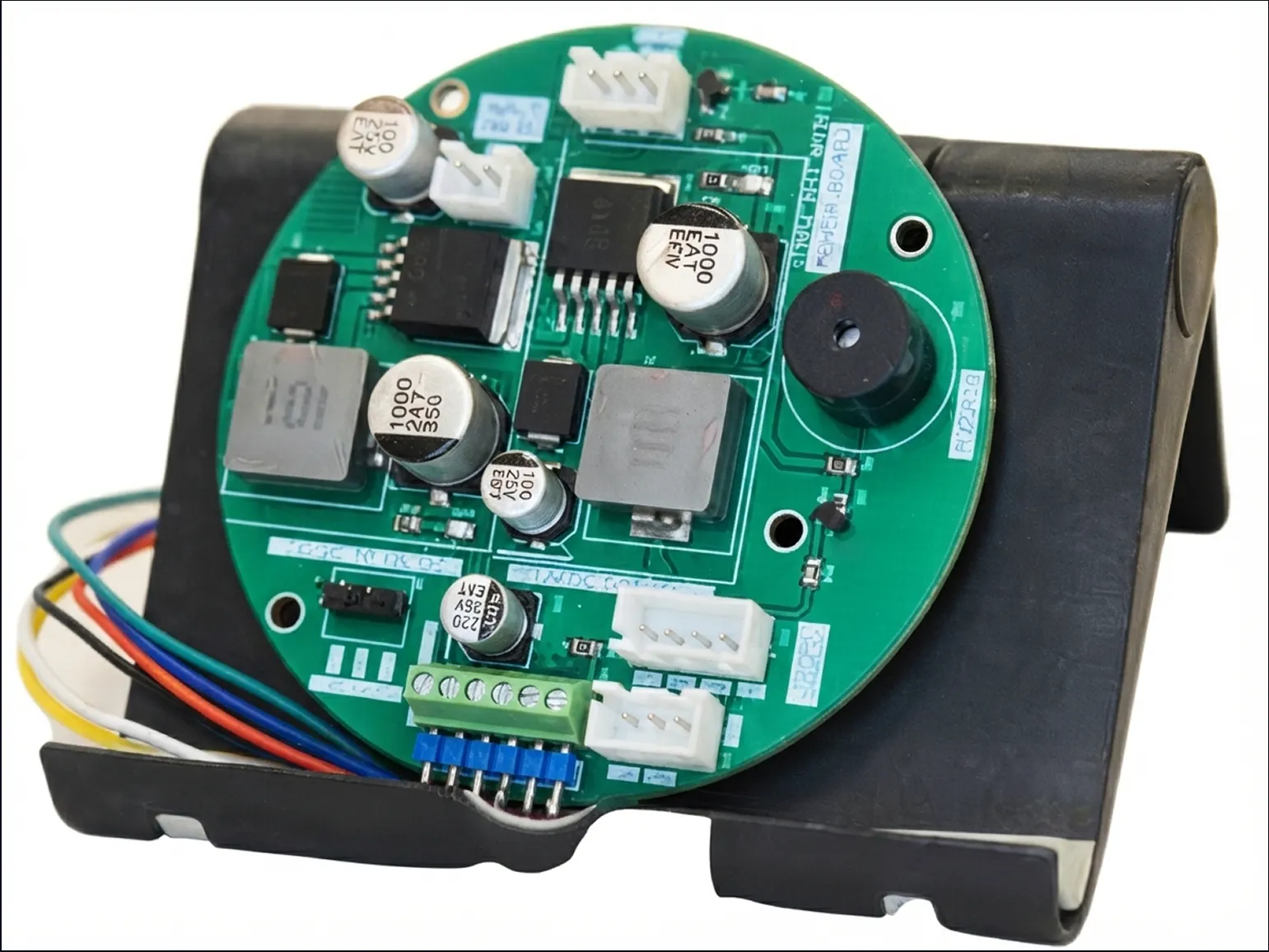
The module that made the demo work in a fortnight is usually the most expensive component on the board. It exists to save engineering time, and it charges you for that every single unit. On a run of fifty nobody notices. On a run of five thousand it is the difference between a healthy margin and a product you quietly stop selling.
We tag every part at schematic review with a horizon: demo-only, pilot, or production. Anything marked demo-only has a named replacement and a note on what has to be proven before the swap — usually an RF measurement or a thermal soak.
The module that saved you a fortnight of engineering charges you for it on every single unit.
Design for the fixture, not just the board
A board that cannot be tested quickly gets tested slowly, and that time is labour you pay for on every unit. Test points, a programming header that a bed-of-nails can reach, and a boot mode that reports pass or fail over one wire are cheap to add at layout and impossible to retrofit.
The fixture is part of the product. We budget it into the prototype phase so the second run inherits a working procedure instead of inventing one under schedule pressure.
Panelisation is a cost decision
Board outline, mouse-bite placement and the keep-outs around the edge decide how many units come off one panel. Getting six instead of four out of the same panel is a twenty-five percent drop in bare-board cost, and it is a layout choice, not a negotiation with your fab.